Curatorial text
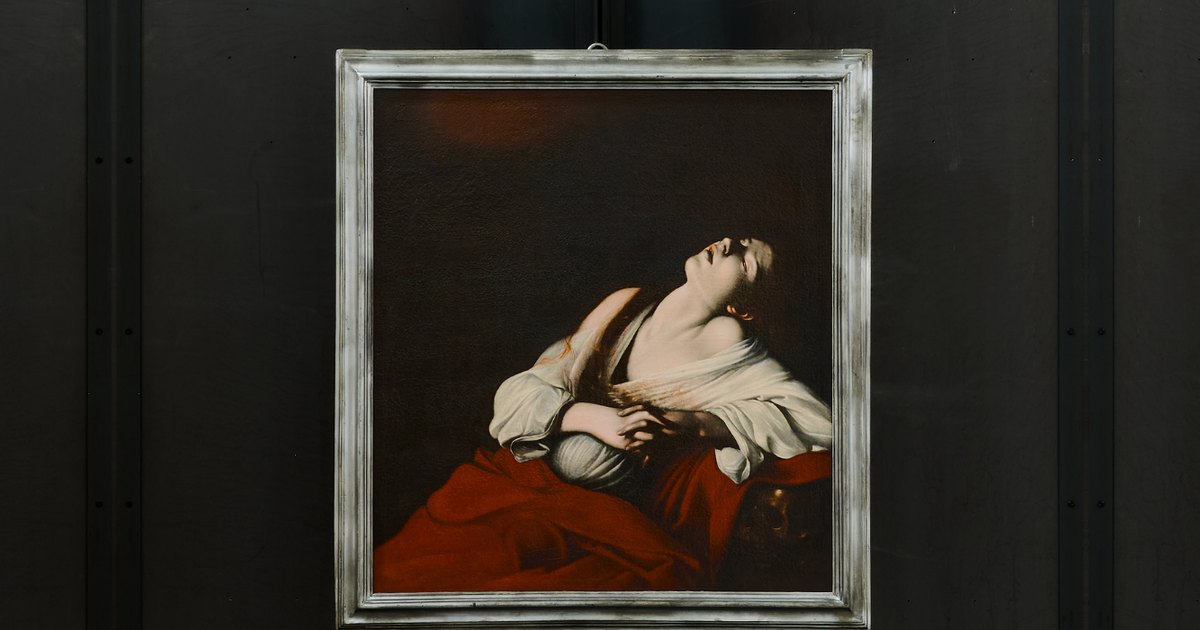
Offsite Arts, in partnership with the Embassy of Italy in Berlin, bring Michelangelo Merisi da Caravaggio's Mary Magdalene in Ecstasy (c. 1606) to Germany for its first public showing, in dialogue with a newly commissioned sculpture by Berlinde De Bruyckere: M.M. MMXXVI, 2026 — Maria Magdalena 2026.
Painted in the year Caravaggio fled Rome, the Magdalene belongs to his late, stripped-down manner: a single figure emerging from darkness, head fallen back, hands loosely clasped, no attributes, almost no setting. The subject is not an episode but a state, the point where rapture and ecstasy become indistinguishable. Working from the model in strong directional light, Caravaggio gave sacred subjects the bodies and faces of ordinary people — a turn towards the observable world that shaped European painting for a century.
De Bruyckere answers across four centuries with M.M. MMXXVI, 2026. The title itself opens the conversation: the initials bind Mary Magdalene to the year of making, collapsing devotion and duration into a single body. Where Caravaggio's saint surrenders to light, De Bruyckere's figure is held in material — wax, linoleum, hair, wood — matter that remembers touch, temperature and time. Body and support are inseparable: the pedestal is torn, darkened and folded into pleats until it reads as draped cloth and as wounded surface at once. Dark bruises on the heels register a long-suffered journey, a form dragged to the limit of endurance, yet still quietly offered.
Both artists return to the same question: how a vulnerable body carries devotion, transformation and grace. Caravaggio finds it in the human face and the fall of light; De Bruyckere finds it in the weight of matter and the refusal to look away. Placed inside a diplomatic residence rather than a museum, the encounter is intimate, temporary and deliberately out of place — a conversation between centuries, materials and beliefs, spoken through one body named Maria Magdalena.